When we evaluate top drones, we consider a few key factors: the pilot's experience, their budget, and their shooting needs. What works for one person might not be suitable for another, so we've carefully reviewed a variety of drones. Whether you're a beginner or a professional, our round-up features recommendations tailored to different kinds of pilots.
Summary of Recommendations
- DJI Mini 4 Pro — best overall — Jump to review
- DJI Mini 3 — best budget — Jump to review
- DJI Air 3 — best all-round — Jump to review
- DJI Mavic 3 Pro — best premium — Jump to review
- Autel Evo Lite+ — best dji alternative — Jump to review
- DJI Mavic 3 Classic — best for enthusiasts — Jump to review
- DJI Mini 4K — best beginner — Jump to review
- DJI Avata 2 — best fpv — Jump to review
- Autel Evo Nano+ — best compact dji alternative — Jump to review
- BetaFPV Cetus Pro Kit — best beginner fpv — Jump to review
Best Compact Drone Overall
1. DJI Mini 4 Pro
What we like
- Improved video features
- Omnidirectional Vision Sensing
- Lightweight but powerful
What we don't like
- Not a major upgrade
- Camera has a fixed aperture
| Weight | 249g |
| Controller | Yes (two options) |
| Camera resolution | 48MP |
| Flight time | 34 minutes |
| Range | 10km-20km |
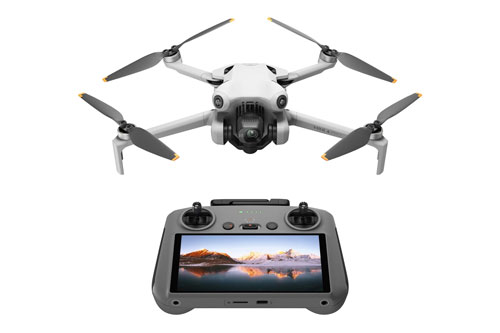
The DJI Mini 3 Pro was once our top pick due to its lightweight design and professional features. The new Mini 4 Pro enhances these aspects for an even better user experience, though not drastically different. If you already have the Mini 3 Pro, an upgrade isn't necessary. However, if you're moving from another model or buying your first Mini series drone, it's a fantastic choice. It retains the compact, folding design and the same 249g takeoff weight, making it easy to comply with regulations. The 1/1.3-inch sensor remains, offering superb image quality.
With improved processing, the Mini 4 Pro handles low-light noise even better. For serious videographers, the new D-Log M color profile aligns more closely with the Mavic 3 for consistent results. Obstacle avoidance is now all-directional, increasing safety indoors or around trees. The ActiveTrack 360° feature is also very effective, making it simple for beginners to fly confidently. Opting for the DJI RC 2 controller gives you the best compact drone package.
Best Budget Drone Without Obstacle Avoidance
2. DJI Mini 3
What we like
- Great image quality
- Small, lightweight build
What we don't like
- No collision avoidance
- No subject tracking
| Weight | 248g |
| Controller | Yes (available without) |
| Camera resolution | 12MP |
| Flight time | 38 minutes |
| Range | 6-10km |
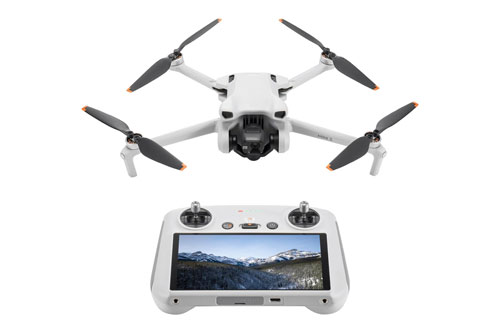
If you're buying your first drone, the Mini 3 is the best budget option available. It's compact, lightweight, and more affordable than the Mini 4 Pro. While it doesn't have the obstacle avoidance feature of its more expensive counterpart, it's a great choice if you can confidently steer clear of obstacles without DJI's automated safety feature. The Mini 3 offers the same 4K video at up to 30fps and high-quality JPEG and raw images, with a 12MP sensor that can rotate for portrait shots, perfect for social media.
However, it lacks log color profiles, which might be a drawback for professionals who need flexible video editing options. Additionally, it doesn't have subject tracking, but it does include DJI's Quickshots feature. This allows beginners to set automated flight paths for capturing engaging video sequences. It's an excellent drone to start with, especially if you opt for the additional controller and take advantage of the downward vision sensors and GPS for precise hovering. While professional drones like the Mavic 3 Classic offer better image quality and stability in windy conditions, the Mini 3 is the ideal choice for those on a budget.
Best All-Round Drone for Aerial Photographers
3. DJI Air 3
What we like
- Dual cameras
- Excellent wind resistance
- Generous flight times
What we don't like
- C1 European weight rating
- Fixed aperture lenses
- Large protruding camera
| Weight | 720g |
| Controller | Yes |
| Camera resolution | 12/48MP |
| Flight time | 46 minutes |
| Range | 10-20km |
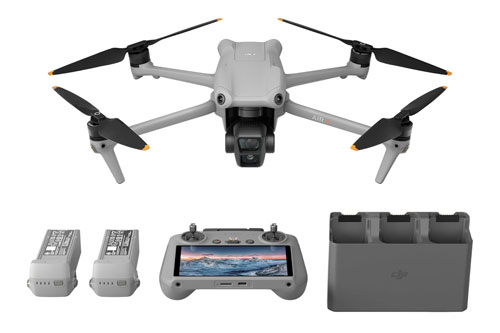
The Air series, specifically the latest Air 3, sits between DJI's Mini and Mavic Pro series. While beginners might find the sub-250g Mini 3 easier to handle, the larger Air 3 offers superior wind resistance and an impressive 46-minute flight time. Its user-friendly interface and safety features, like obstacle avoidance, also make it accessible for newcomers.
Weighing 720g at takeoff, the Air 3 falls into Europe’s C1 category, requiring you to maintain a greater distance from people, animals, and events to comply with regulations. Despite this, the Air 3's new 3x telephoto lens allows you to get close to the action. With dual cameras, the Air 3 provides excellent image quality and versatility. Although its fixed aperture lenses can be challenging for video shooting with ND filters in varying light conditions, the 3x zoom lens adds to its versatility, making it a more adaptable aerial camera than the Air 2S.
Best Premium Drone
4. DJI Mavic 3 Pro
What we like
- Superb Four Thirds camera
- Triple-camera system
- Adjustable aperture
What we don't like
- Pricier than rivals
- Some missing features at launch
| Weight | 958g (Mavic 3 Pro Cine, 963g) |
| Controller | Yes |
| Camera resolution | 20MP (Hasselblad camera), 48MP (70mm medium tele camera), 12MP (tele camera) |
| Flight time | 43 minutes |
| Range | 15km (FCC), 12km (CE) |
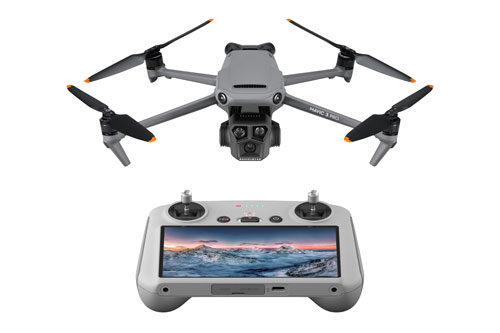
The Mavic 3 Pro is the first consumer drone equipped with three cameras, making it perfect for aerial photographers and filmmakers seeking maximum versatility. Its main camera, identical to the one in the Mavic 3 Classic, features a 20MP Four Thirds sensor, providing the best image quality with adjustable aperture and professional video formats and frame rates. For those needing more reach than the main 24mm focal length, the 3x and 7x telephoto cameras also deliver outstanding images.
Despite being a professional-grade drone, the Mavic 3 Pro is easy to fly, even in windy conditions, thanks to its intuitive controls and robust safety features. However, it falls into the restrictive C2 European drone category due to its weight. Its high price may deter beginners, but it offers a more portable and cost-effective option for professionals compared to the Inspire 3, while also being more versatile.
Best DJI Air 2s Alternative
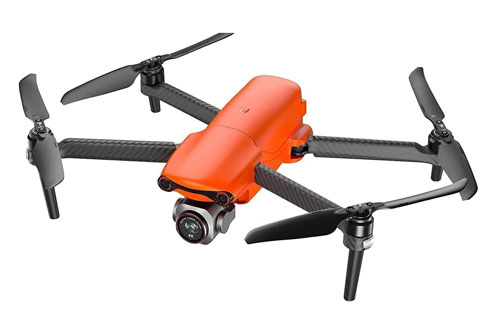
5. Autel Evo Lite+
What we like
- 1-inch sensor with adjustable aperture
- 40-minute flight time
What we don't like
- Costs more than Air 2S
- No D-Log profile
| Weight | 835g |
| Controller | Yes |
| Camera resolution | 20MP |
| Flight time | 40 minutes |
| Range | 12KM |
The Evo Lite+ is Autel’s top model aimed at competing with DJI’s Air 2S. It can shoot 5.4K video at 30fps with a 1-inch sensor, boasting specs that closely match the Air 2S. However, it surpasses both the Air 2S and the Mavic Pro 2 with its 40-minute flight time and adjustable aperture, ranging from f/2.8 to f/11. Although it lacks the fourth-axis stabilization found in its Evo Lite sibling, the larger sensor pixels enhance its performance in low-light conditions.
Professional videographers might be deterred by the absence of 10-bit video and D-Log profile, and the lack of side obstacle sensors is a notable downside. Despite these limitations, our review found the Lite+ to be a highly versatile flying camera. Its 20MP sensor is one of the best available on a drone today, making it a strong contender against the Air 2S for its price.
Best Value Camera Drone for Enthusiasts
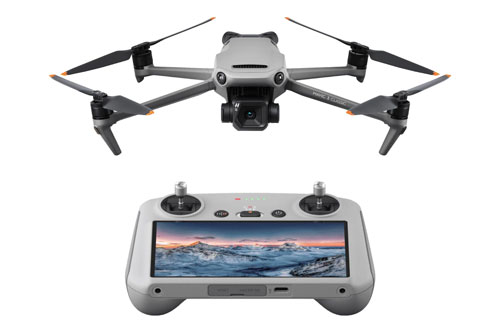
6. DJI Mavic 3 Classic
What we like
- Excellent Hasselblad sensor
- Impressive safety features
What we don't like
- Still an expensive option
- Flight time shorter than claimed
| Weight | 895g |
| Controller | Yes |
| Camera resolution | 20MP |
| Flight time | 46 minutes |
| Range | 15KM |
The Mavic 3 Classic is a slightly simplified version of the Mavic 3, omitting the telephoto camera of the more expensive model. While not a budget option, this makes it more affordable for videographers. It keeps the outstanding 4/3 main sensor, which we consider the best camera on a folding drone. Though not designed for beginners, our tests showed that features like collision avoidance, subject tracking, and automated Quickshots make the Classic easy to fly confidently, despite the real-world battery life being less than the advertised 46 minutes.
You won't get the 1TB SSD or Apple ProRes recording found in the Cine edition, but its capability to capture 5.1K video in Normal, HLG, and 10-bit profiles should satisfy most videographers. The larger sensor also offers excellent noise handling across the entire ISO range. Plus, you get all the flight and safety features of the original Mavic 3 models. If you're okay with a 1-inch sensor, the DJI Air 2S is a more budget-friendly option. However, if you want the best image quality from a foldable drone, the Mavic 3 Classic is the top choice.
Best Cheap Drone for Novices
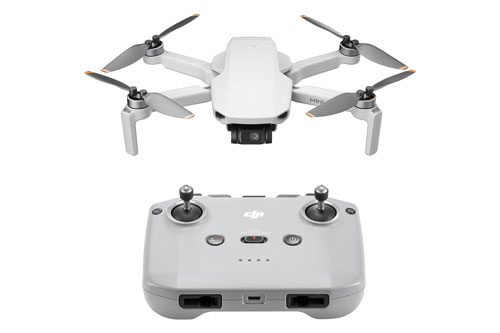
7. DJI Mini 4K
What we like
- Excellent value
- 4K video quality beats rivals
- Probably your best first drone
What we don't like
- No object-collision sensors
- Lacks subject tracking found in pricier models like the Mini 4 Pro
| Weight | 249g |
| Controller | Yes |
| Camera resolution | 12MP |
| Flight time | 31 minutes |
| Range | 10 miles |
The DJI Mini 4K is easily one of the best drones for beginners. Weighing under 249g, it doesn't require FAA registration for recreational use, making it super accessible right out of the box. It’s packed with beginner-friendly features like one-tap takeoff/landing, stable GPS hovering, and automatic return to home (RTH), so even first-time pilots can fly confidently. The in-app tutorials also make learning smooth and stress-free.
Despite being entry-level, it delivers serious performance. The 4K camera paired with a 3-axis gimbal captures buttery-smooth, cinematic footage even in low light. With up to 10km HD video transmission, wind resistance up to 38kph, and extended battery options (up to 93 minutes), it gives you pro-level tools in a compact, easy-to-fly package. Whether you're flying at the beach or in the mountains, the Mini 4K is stable, powerful, and built to help you learn without limits.
Best FPV Drone
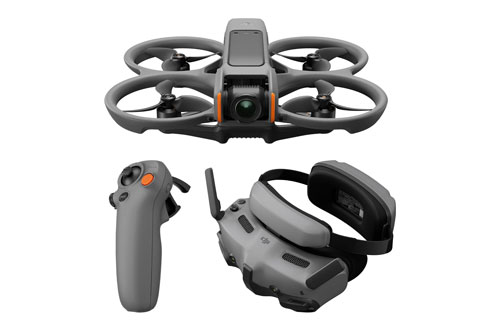
8. DJI Avata 2
What we like
- Incredible image quality
- Solid flight times
- Easy and stable to fly
What we don't like
- Awkward manual handling
- Imperfect controller ergonomics
| Weight | 377g |
| Controller | Optional |
| Camera resolution | 12MP |
| Battery size | 2,150 mAh |
| Range | 13km (FCC), 2km (CE), 10km (SRRC) |
The DJI Avata was already our top pick for first-person drones, and its sequel improves on an already great design. If you're seeking an easy entry into FPV flight, the Avata 2 is an excellent option. In our review, we found it easy to fly, with the new Easy ACRO mode making complex aerial maneuvers more accessible for beginners. The updated Motion Controller 3 is straightforward to use and precise enough for indoor flying, though seasoned pilots might prefer the DJI Remote Controller 3 for full manual control.
The Avata 2's new design is longer, flatter, and more aerodynamic, allowing for longer flight times of up to 23 minutes and quieter operation. Its enhanced 1/1.3-inch CMOS sensor and 10-bit D-Log M support enable higher quality 4K/60p footage with better dynamic range, capturing more details in shadows. The footage streamed to the upgraded DJI Goggles 3 is also sharper, thanks to a new video transmission system that helps identify potential obstacles more easily.
Best Compact DJI Alternative
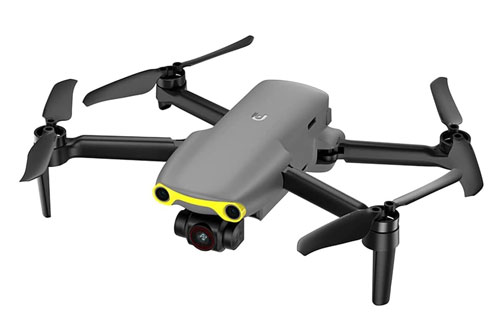
9. Autel Evo Nano+
What we like
- Big sensor and bright lens
- Collision detection
- Stunning video and stills
What we don't like
- Fragile
- Still missing subject-tracking
| Weight | 249g |
| Controller | Yes |
| Camera resolution | 12.5MP |
| Battery size | 2250 mAh |
| Range | 16.8km |
The DJI Mini 4 Pro is our favorite in the sub-250g category, but if you prefer a compact drone from another brand, the vibrant Evo Nano+ is a great option. Its large sensor and bright lens outperformed the DJI Mini 2 in our tests, especially in low-light conditions. Locking the exposure to ISO 3200 significantly improved night-time results. The Autel fly app has also seen significant improvements, offering a more user-friendly interface for photos and videos.
Despite being under 250g, the Nano+ handles wind well and felt very controllable in our tests. Its three-way obstacle avoidance system increased our confidence, though bright sunlight occasionally triggered false proximity alerts. While the Nano+ feels less sturdy than the Lite+, its rigidity improves with the battery inserted. Overall, the Evo Nano+ is an excellent small drone that can capture stunning 4K/30p video. If you want a compact alternative to DJI that doesn't require registration, the Evo Nano+ is worth considering.
Best FPV Drone Kit for Beginners
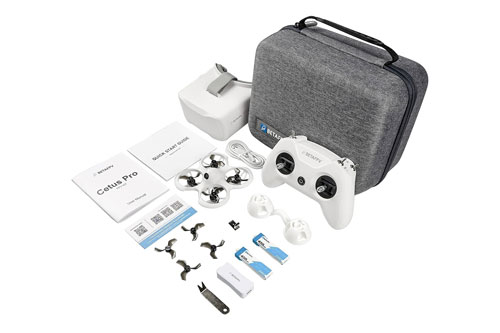
10. BetaFPV Cetus Pro Kit
What we like
- Affordable FPV kit
- Robust build quality
What we don't like
- Limited battery life
- Can’t shoot photo of video
| Weight | 45.8g |
| Controller | Yes |
| Camera resolution | N/A |
| Flight time | 5 minutes |
| Range | 80m |
For beginners looking to try first-person drone flight, we believe the BetaFPV is the best choice. This complete and affordable FPV kit includes goggles, batteries, and a console-style controller that you can also use for simulator practice. The drone comes ready to fly, is extremely lightweight, and durable enough to handle reasonable impacts, which is important since first-person flying often leads to crashes. It also features Turtle Mode, allowing it to right itself remotely.
The BetaFPV offers three speed settings and three flight modes, providing flexibility for learners. We found the Normal mode easiest to fly, while Manual/Acro mode was the most challenging, requiring precise control and throttle management. Apart from the potential nausea from FPV flight, the main downsides of the Cetus kit are its limited battery life of just 4-5 minutes per charge and the lack of an option to record stills or video. Despite these drawbacks, if you want an affordable way to experience FPV flying, the BetaFPV is a great option.